Guides for business phones.
Eight practical explainers on VoIP, SIP trunking, PBX and cloud phone systems.

What is VoIP? How internet calling works
VoIP turns your voice into data packets and sends them over the internet. Here is how it works, what you need, and where it falls short.
What is SIP trunking? How it works and when to use it
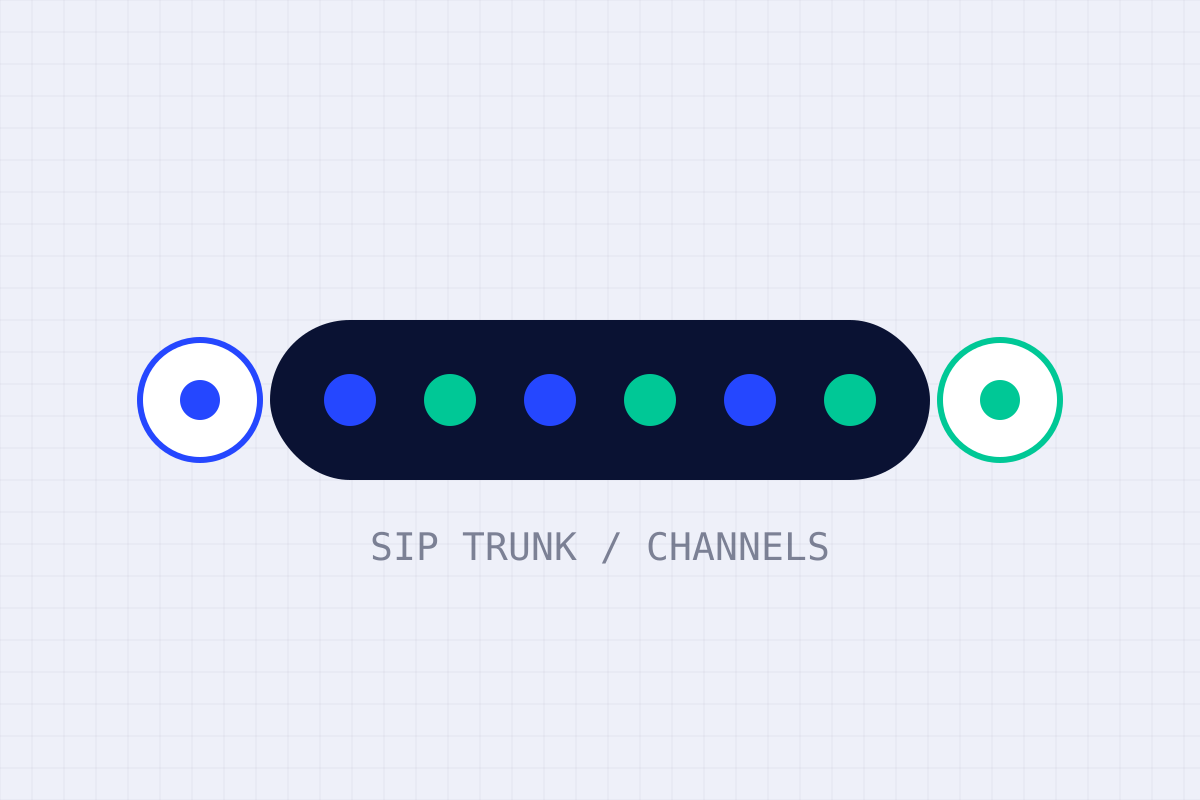
SIP trunking connects your business phone system to the phone network over the internet. Learn how channels, pricing models and setup work.
Cloud phone system: what it is and how to choose one
A cloud phone system runs your business phones over the internet with no on-site PBX. See features, trade-offs and a simple way to compare providers.
What is a PBX? On-premise vs hosted PBX explained
A PBX is the private phone system that routes calls inside and outside a business. Compare traditional, IP and hosted PBX options.

VoIP vs landline: cost, reliability and which to choose
A fair comparison of VoIP and traditional landlines on cost, call quality, power outages, features and emergency calling.

VoIP phone system for small business: a buyer's checklist
What to check before you pick a business VoIP provider: features, bandwidth, contracts, support, porting and emergency calling.
How to get a business phone number: 5 options compared
Five ways to get a business phone number, from VoIP and virtual numbers to toll-free and landlines, with pros and cons of each.
VoIP codecs: G.711 vs G.729 vs Opus compared
How VoIP codecs affect call quality and bandwidth, with real per-call numbers for G.711, G.722, G.729 and Opus.
Size your phone lines before you buy.
Free calculators for lines, agents and bandwidth.
Open the tools →