VoIP stands for Voice over Internet Protocol. Instead of sending your voice over a dedicated copper phone line, a VoIP system converts it into small digital packets and sends them across an IP network, usually the internet. At the other end the packets are turned back into sound.
How does VoIP work?
- Your phone or app captures your voice as an analog signal.
- A codec compresses and converts it into digital data.
- The data is split into small packets (commonly one packet every 20 milliseconds).
- A signaling protocol, usually SIP, sets up the call between the two ends.
- Packets travel over the network and are reassembled and decoded into sound at the other side.
The signaling and the voice travel separately. SIP handles who is calling whom, while the voice itself usually moves as RTP packets. If you want the numbers behind this, our VoIP bandwidth calculator shows how much capacity each call uses.
What you need to use VoIP
- A reliable internet connection with enough upload and download capacity
- A VoIP provider or a phone system that supports it
- Phones: desk phones, a softphone app on a computer or mobile, or an adapter for an analog phone
- A router and network that can prioritize voice traffic (QoS) if many calls run at once
Common types of VoIP service
| Type | What it is | Typical use |
|---|---|---|
| Hosted / cloud phone system | The provider runs the phone system for you | Most small and mid-size businesses |
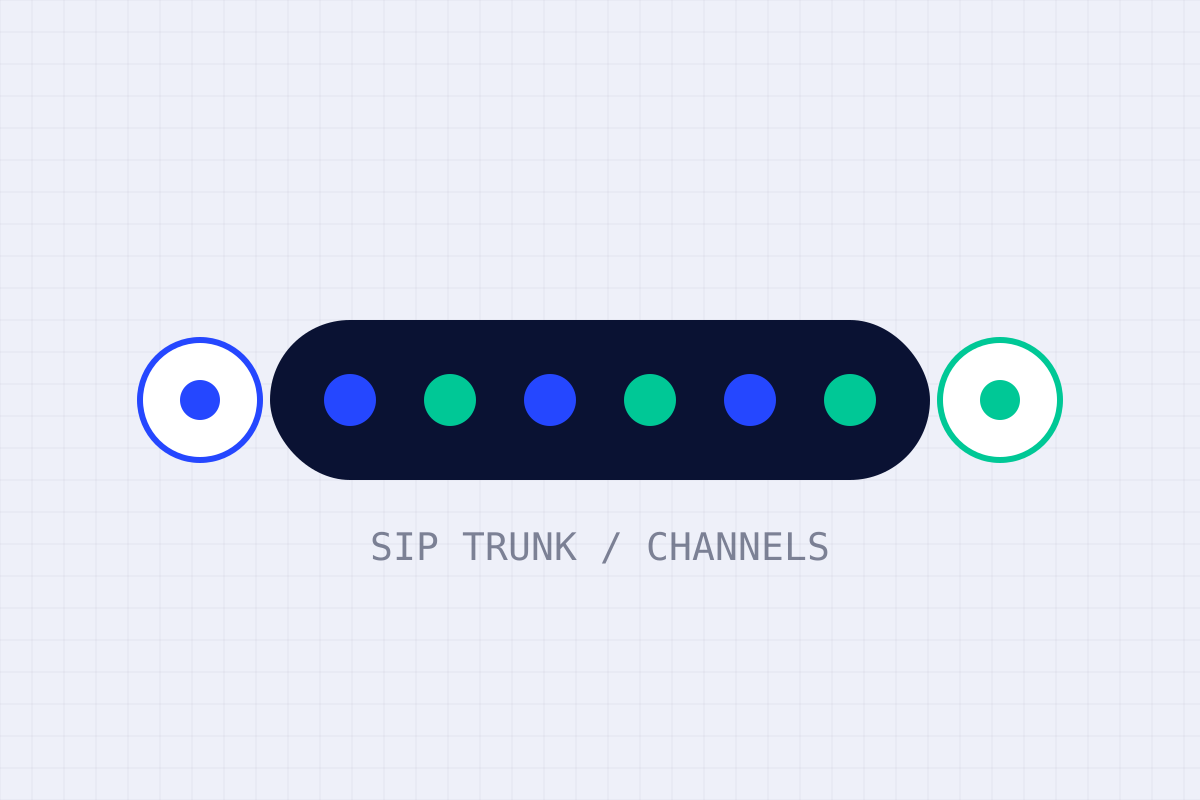
| SIP trunking | Internet voice lines connected to your own PBX | Companies keeping an existing PBX |
| Residential VoIP | Home phone service over broadband | Households replacing a landline |
| Softphone / app | Calling through an app on a device | Remote work and mobile teams |
Benefits and drawbacks
VoIP usually costs less for long distance and makes it easy to add users, work remotely and keep one number across devices. The trade-offs are dependence on your internet connection and power, the need to set up emergency calling correctly, and call quality that can suffer on congested networks.
Next, compare VoIP vs landline or read how a cloud phone system packages VoIP for businesses.
Frequently asked questions
Does VoIP need internet?
Yes. VoIP calls travel over an IP network, so you need a working internet or private network connection.
Is VoIP the same as a cloud phone system?
A cloud phone system is a business service built on VoIP. VoIP is the underlying technology.
Can I keep my phone number?
Usually yes. Providers can often port an existing number, though the process and timing vary.